A Plea from the Deep Core
The Poem
About the Poem
Paul Laurence Dunbar’s Sympathy Poem captures the anguish of confinement through the image of a caged bird longing for freedom. The scene contrasts the vibrant, open upland slopes and flowing river with the bird’s trapped existence. Dunbar reveals the stakes are life itself: the bird beats its wings bloody against cruel bars, driven by an instinctive need to return to the bough, yet forced back to its perch. Its song is not joyful but a desperate prayer and plea flung toward Heaven from a bruised heart. The mood is one of deep sorrow and empathy, as the speaker intimately knows the bird’s pain, feeling the pulse of old scars and the keener sting of thwarted hope. This work speaks to universal themes of oppression, resilience, and the yearning for liberation, using the bird’s struggle as a powerful metaphor for human suffering.
About the Music
Elias Vale’s Embers and Stars is a melancholic ambient classical piece that unfolds at a slow, contemplative tempo. Built around a gentle piano melody, the track is cushioned by soft, sustained strings and a distant, echoing harp, creating a soundscape that feels both intimate and vast. The mood is reflective and tender, evoking a sense of quiet, enduring devotion, as if listening to a memory held close in the stillness of night. The composition recalls the minimalist, emotive style of composers like Max Richter or Ludovico Einaudi, balancing sparse piano phrases with atmospheric orchestral layers. Embers and Stars invites listeners into a space of gentle longing and serene beauty, perfect for moments of introspection, study, or deep relaxation.
About the Art
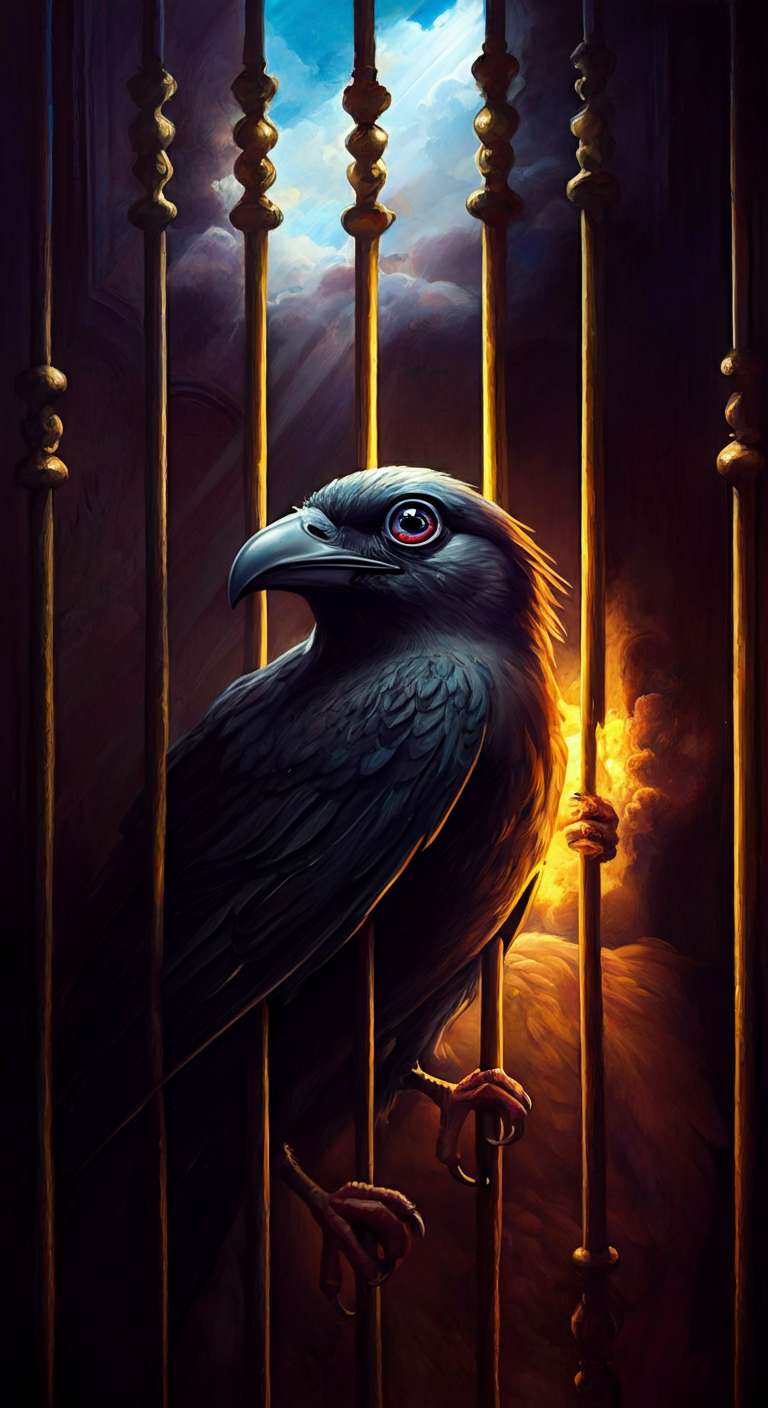
Corinne Vale's expressionist painting The Bruised Wing presents a stylized bird pressed against cruel golden bars in the lower right third of a vertical canvas, its human-like, anguished eye fixed upward toward a sliver of vibrant, impossible blue in the upper left. The composition is stark, dominated by a palette of deep bruised purples, stark blacks, and sickly yellows, with dramatic shadows and a single shaft of harsh, cold light from a high, unseen window. Thick, agitated impasto brushstrokes—heavily layered and scraped—create a visceral texture that amplifies the mood of trapped despair and yearning. The work evokes the emotional intensity of Edvard Munch, using distorted forms and exaggerated color to render psychological torment. The lone streak of blue outside the bars offers a cruel contrast, heightening the sense of confinement and longing central to this powerful expressionist piece.