A Sordid Boon: The Sea Bares Her Bosom
The Poem
About the Poem
William Wordsworth’s sonnet “The World Is Too Much With Us; Late And Soon” laments humanity’s disconnection from nature, driven by an obsession with materialism and commerce. The speaker observes that people waste their spiritual and emotional energy on “getting and spending,” leaving them blind to the beauty of the sea baring itself to the moon and the winds that howl like sleeping flowers. The mood is one of deep frustration and sorrow, as the natural world no longer moves the modern heart. The stakes are existential: the speaker wishes he had been born a Pagan in an outdated creed, because then he might still sense the divine in nature, catching glimpses of sea gods like Proteus rising from the waves or hearing Triton’s horn. This yearning reveals a profound loss of wonder and a longing for a more soulful, connected existence.
About the Music
Elias Vale’s Forgotten Tides is a slow, cinematic orchestral piece that unfolds at 60 BPM, evoking a sense of vast, empty space and quiet melancholy. The composition centers on a mournful cello melody, supported by deep, resonant double bass and shimmering, ethereal strings that create an atmosphere of contemplative awe. Swells of French horns suggest distant grandeur, while occasional harp glissandos and a distant, mournful solo trumpet add a layer of haunting beauty, referencing the “wreathed horn” imagery. The mood is both awe-struck and slightly sorrowful, building to a quiet, unresolved climax that leaves the listener suspended in reflection. Vale’s work here echoes the brooding, epic minimalism of composers like Max Richter or Jóhann Jóhannsson, yet stands alone with its distinct blend of orchestral textures and emotional restraint. This instrumental piece is ideal for meditation, film scores, or reflective listening, capturing the ebb and flow of forgotten memories against an endless horizon.
About the Art
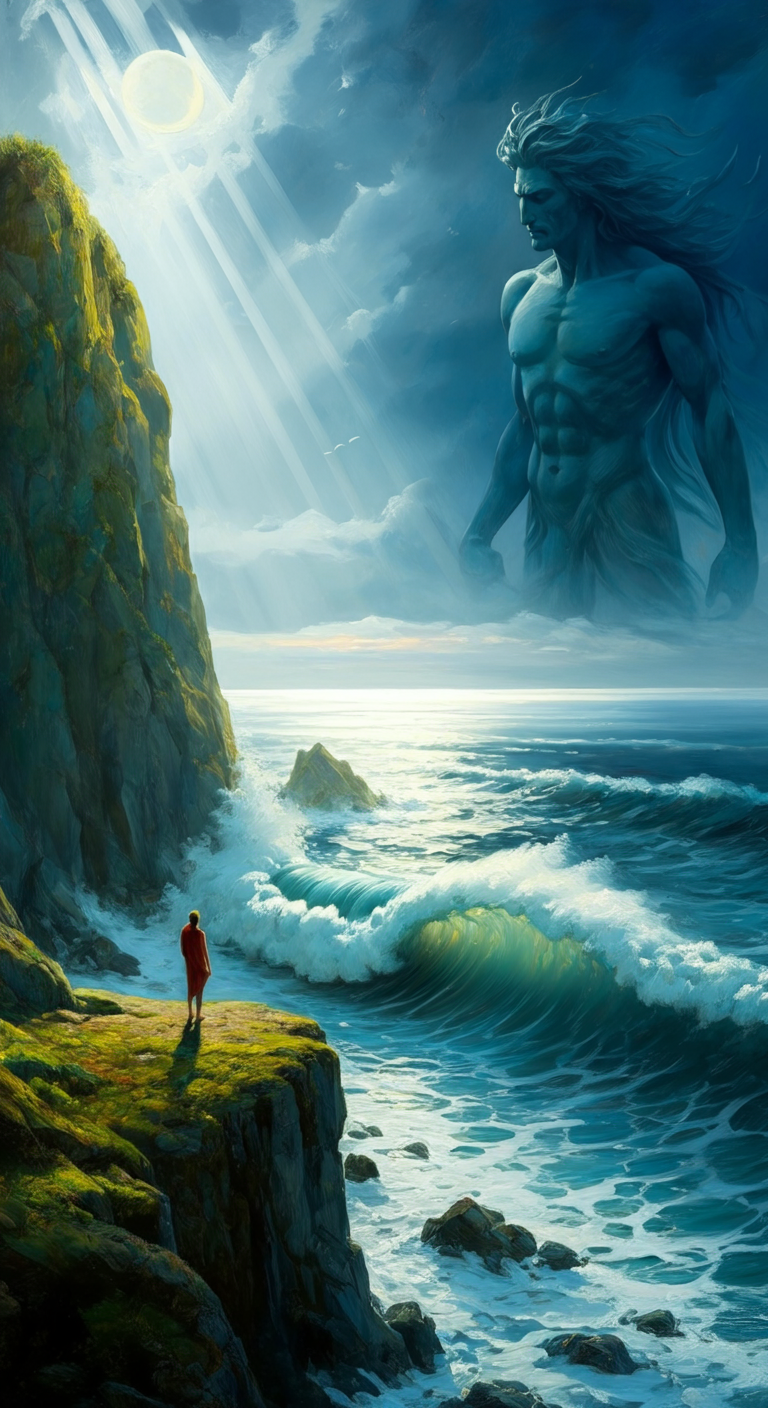
Caspian Reed’s *Out of Tune* is a Romantic oil painting that captures sublime nature and emotional intensity through a moonlit seascape. The composition places a solitary figure on a cliff in the lower left, dwarfed by the vast, stormy sky and churning sea. Dramatic shafts of silvery light pierce the clouds, illuminating a palette of deep Prussian blues, silvery greys, and foamy whites, with accents of mossy green on the cliff. The visible, expressive brushstrokes and thick impasto in the crashing waves evoke the texture of Romantic masters like Caspar David Friedrich. In the upper right, the mythical figure of Proteus is ambiguously suggested within the mist and waves, adding a layer of mythic mystery. The mood is one of awe and melancholy, as the narrator gazes outward, confronting the untamed power of nature and the ineffable.