Chains Paid, Dawn Gained
The Poem
About the Poem
Maya Angelou’s “Million Man Man March Poem” opens with stark imagery of enduring suffering—a long night, a deep wound, a dark pit—that gives way to a harrowing recollection of enslavement. The speaker describes being dragged by braids under a dead blue sky while a loved one, hands tied and mouth bound, could not intervene, cementing a shared helplessness and a badge of shame worn throughout history. Yet the poem pivots dramatically from this anguish, as voices of old spirits speak across centuries and oceans, urging unity and collective salvation. The stakes are both personal and ancestral: the chains of slavery, the text insists, have already paid for freedom again and again, calling listeners to draw near and save their race. The mood shifts from despair to defiant hope, transforming a record of trauma into a rallying cry for resilience and communal strength.
About the Music
Echoes of the Diaspora delivers a profoundly moving experience with Ancestral Call, a piece rooted in the soulful ambient genre that evokes the solemn weight of memory and lineage. The composition unfolds at a slow, meditative tempo, anchored by the deep, resonant voice of a cello that seems to speak from another time. Sparse piano notes fall like distant raindrops, while a faint, wordless choir hums from the periphery, creating a sense of sacred, open space. A subtle, heartbeat-like percussion pulse grounds the listener, suggesting both the continuity of life and the pull of a forgotten home. The mood is one of quiet reverence and melancholic searching, reminiscent of the minimalist, emotionally charged soundscapes of artists like Jóhann Jóhannsson or the spiritual jazz of Alice Coltrane. This track does not simply tell a story; it invites the listener to feel the echo of an ancient call across generations.
About the Art
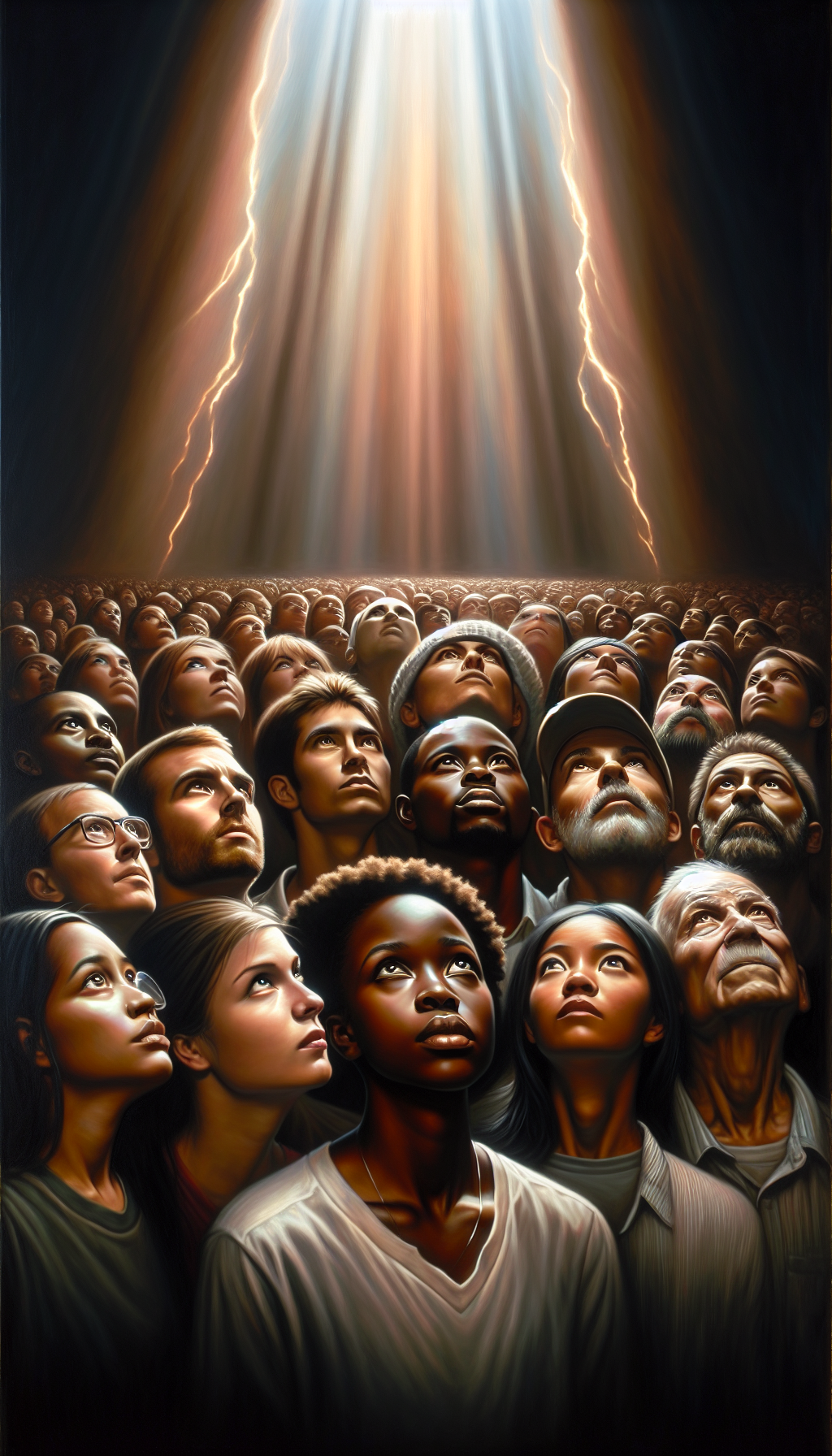
Amina Sankofa’s The Long Night’s End is a powerful symbolic figurative portrait that captures a diverse group of people gazing upward with determined expressions as dawn light cuts through deep, oppressive shadows. The tall, vertical composition emphasizes their collective resilience, with faces partially illuminated to reveal strength and unity. Sankofa employs a photorealistic technique, rendering skin tones and textures with striking clarity, while glowing chains break apart in the background—a potent metaphor for liberation. The mood shifts from somber darkness to hopeful warmth, with golden and amber highlights contrasting against cool, murky blues. Evoking the emotive realism of Kehinde Wiley and the spiritual symbolism of contemporary African diaspora art, this piece uses oil on canvas to create a sense of monumental triumph. The interplay of light and shadow, along with the symbolic breaking of chains, reinforces themes of endurance and the arrival of a new dawn after prolonged struggle.