Faith's Naked Shingle
The Poem
About the Poem
Matthew Arnold’s Dover Beach opens on a serene nighttime seascape, where the speaker invites a companion to the window to share the tranquil view across the English Channel. Yet the calm is undercut by the grating sound of pebbles dragged by the waves, a rhythmic, mournful noise that introduces the poem’s central tension. Arnold uses this scene as a metaphor for a spiritual crisis: the once-full “Sea of Faith” that surrounded humanity has now receded, leaving only a “melancholy, long, withdrawing roar” and a world stripped of certainty and joy. The dramatic situation shifts from observation to urgent personal stakes, as the speaker turns to his beloved, pleading for fidelity in a world that offers no comfort, no love, no light. The mood moves from deceptive peace to profound loss, then to a desperate clinging to human connection as the only anchor against existential despair.
About the Music
Elias Wainwright’s Ebb and Flow is a melancholic modern classical piece that unfolds at a slow, deliberate tempo. The composition centers on a deep, resonant cello melody that feels both sorrowful and introspective, supported by soft, spacious piano chords that drift like memories. Distant, atmospheric recordings of waves and shifting pebbles provide a textural backdrop, grounding the music in a natural, coastal landscape. This combination evokes a contemplative and somber mood, reminiscent of the minimalist work of composers like Max Richter or Jóhann Jóhannsson, where emotion is built through restraint and atmosphere rather than dramatic crescendos. The piece captures a sense of gentle, inevitable motion—like the tide itself—inviting the listener into a quiet space of reflection and solitude.
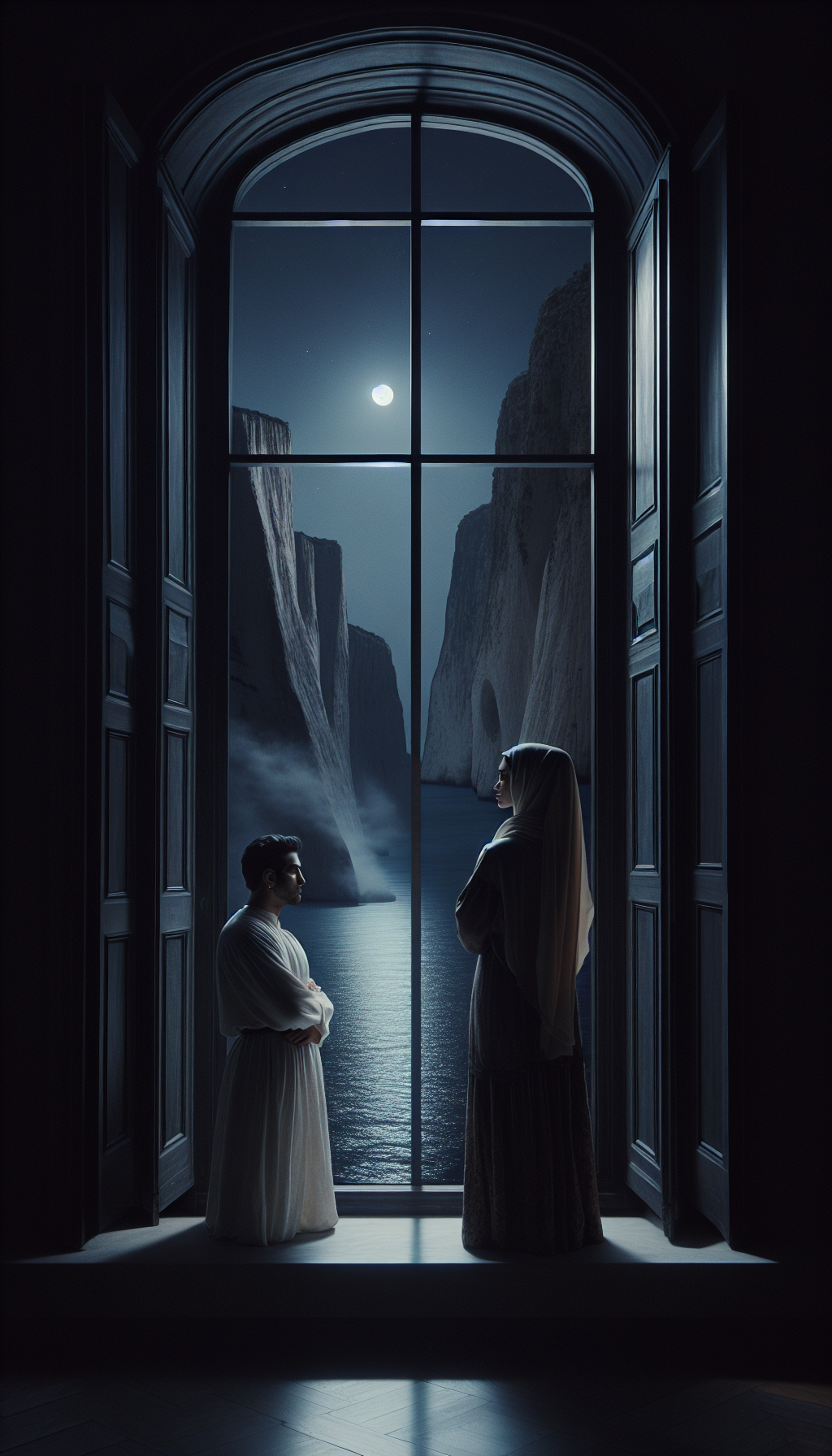
About the Art
In Celia Vance’s atmospheric realist painting *The Withdrawing Roar*, a man and a woman stand close together before a tall, dark window frame at night, their solemn faces illuminated only by cold moonlight. The vertical composition directs the eye upward through the upright figures toward a vast moonlit sea meeting a pale shore, with distant cliffs fading into shadow. The interior is dim and hushed, contrasting the cool silver and deep blue of the exterior seascape. Vance uses subtle chiaroscuro and restrained brushwork to evoke a mood of quiet introspection and fleeting connection. The work recalls the contemplative solitude of Edward Hopper, yet its vertical, window-framed vista and emotional restraint give it a distinct, cinematic stillness. The interplay of light and darkness, the figures’ thoughtful postures, and the title’s suggestion of a receding sound make this a poignant meditation on distance, memory, and the silent vastness beyond.