Future Age's Indignant Light
The Poem
About the Poem
William Blake’s “A Little Girl Lost” presents a haunting vision of innocence punished by patriarchal authority, where love itself becomes a crime. The poem opens with an address to future children, warning them that in a past age, “sweet love” was condemned. Blake then shifts to a pastoral scene of golden youth, where a young couple meets in a garden at dawn, free from parents and strangers, delighting in naked joy and playful kisses. Their secret rendezvous, planned for night’s silence, shatters when the maiden returns home to her father. His loving look, compared to a holy book, terrifies her into trembling submission. The father’s final, anguished plea—“Ona, pale and weak, to thy father speak!”—reveals the stakes: a child’s fear of judgment from the very figure meant to protect her. The mood moves from idyllic freedom to oppressive dread, critiquing religious hypocrisy and the cruelty of moral laws that crush natural love.
About the Music
Eternal Devotion by Aria of the Heart is a slow, flowing ambient classical piece that evokes a sense of reverent tenderness and expansive serenity. Built around a soft solo piano melody, the composition is gently layered with distant ethereal strings and delicate harp arpeggios, creating a soundscape that feels both intimate and vast. The music evokes the contemplative, cinematic minimalism of composers like Max Richter or Ludovico Einaudi, where each note breathes with emotional weight. This instrumental piece invites the listener into a quiet, sacred space, perfect for reflection, meditation, or scenes of deep emotional connection. Its unhurried tempo and lush, airy textures make it ideal for moments requiring a backdrop of gentle devotion and timeless grace.
About the Art
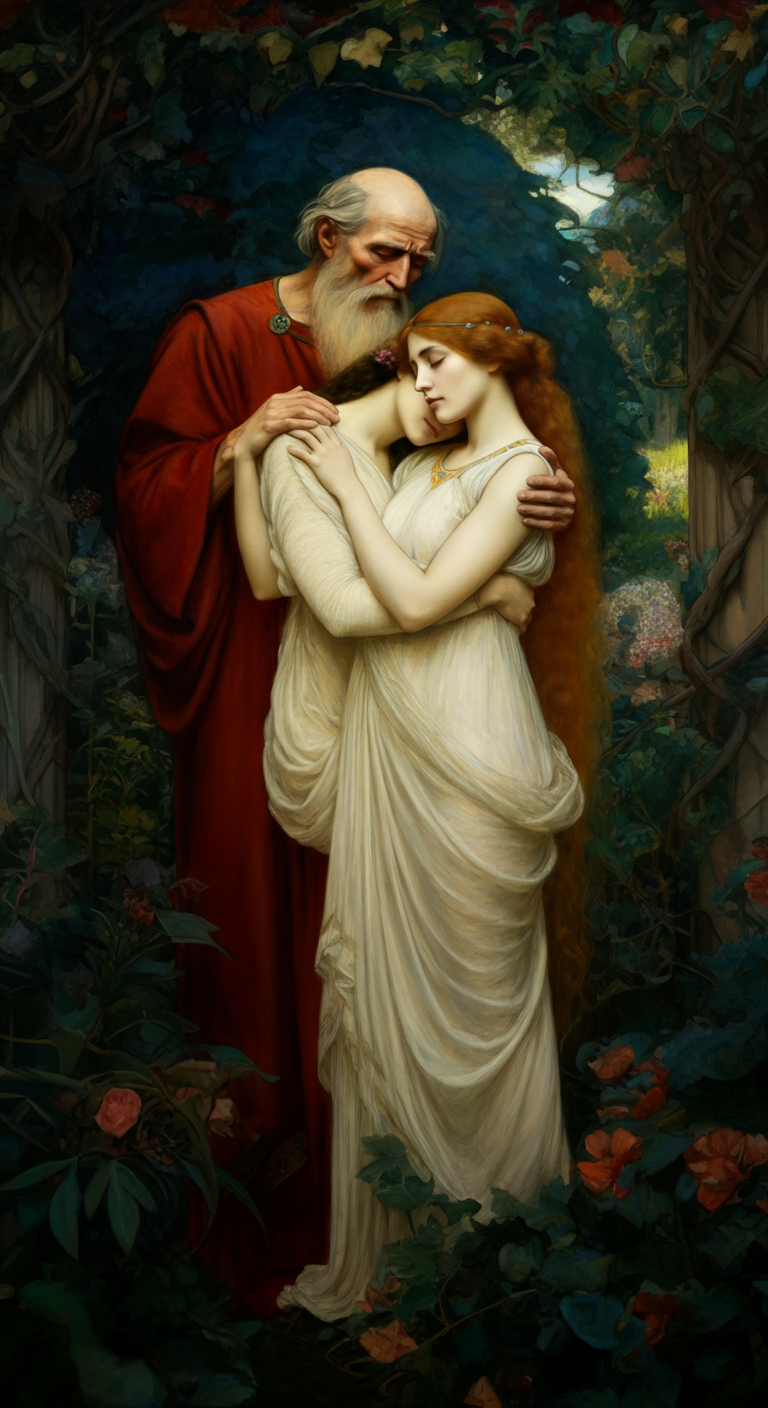
Celia Moreau’s The Garden’s Secret is a vertical oil painting in the detailed, symbolic style of the Pre-Raphaelite Brotherhood. Bathed in early morning golden-hour light, the work depicts a youthful pair entwined peacefully in a sunlit clearing, their luminous pale flesh and white drapery contrasting with rich jewel tones of emerald green and deep blue foliage. The composition places the couple in the right third of the frame, while in the dark left third, barely visible through twisted branches, the stern, pale face of a father looks on from the shadows. The maiden’s face is the clear focal point, caught between joy and impending dread. Moreau achieves a highly detailed, smooth texture through oil paint with glazing, creating dappled shadows that heighten the mood of fragile beauty and hidden menace.