Guest Expert
The Poem
About the Poem
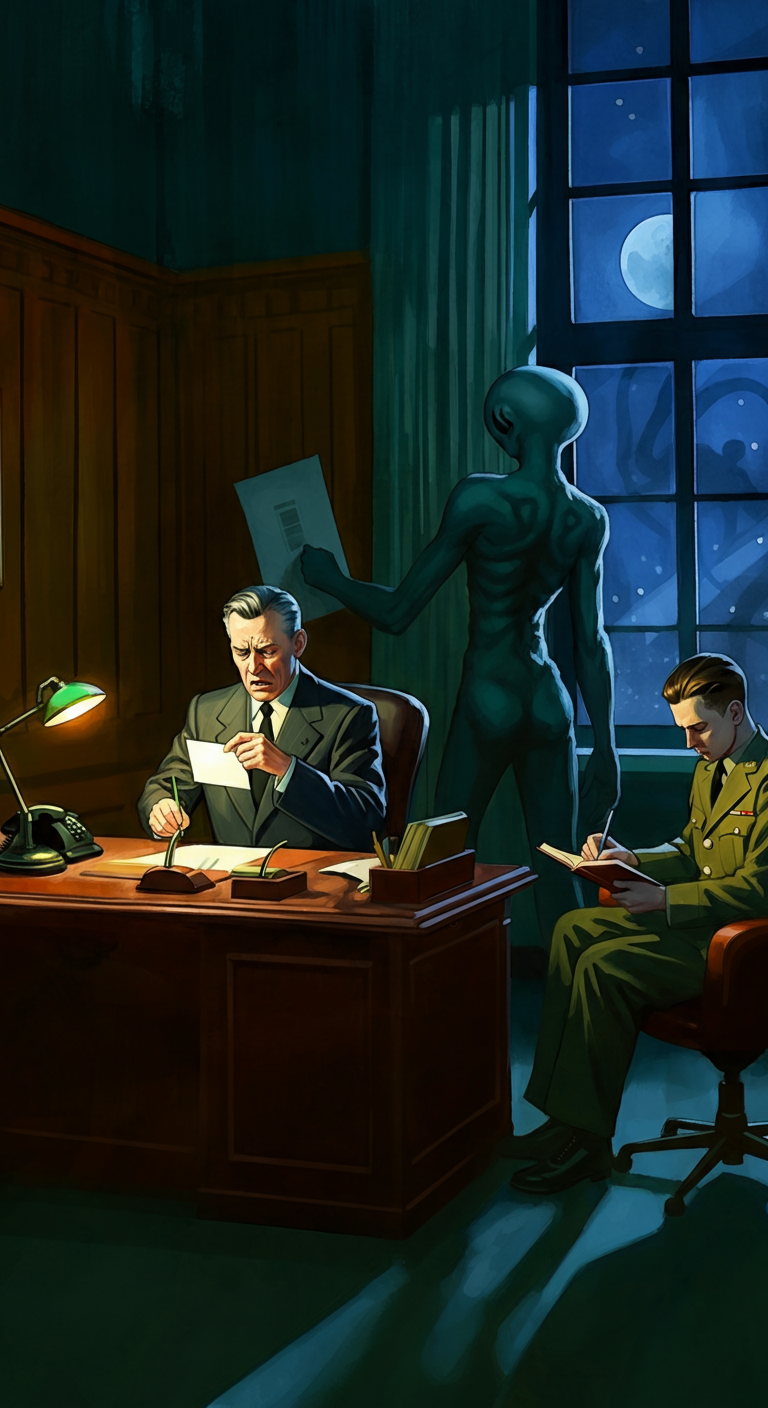
In Lang Allen Kim’s science fiction poem “Guest Expert,” an alien visitor offers humanity a terrible bargain: total peace on Earth in exchange for half the population. The scene unfolds in a sterile government office where three officials cast secret ballots condemning billions to death. The Martian stands by a window, one appendage raised like a blessing, while a newspaper screams of famine and war. After curing rabies and the common cold, the visitor proposes peace at the cost of every living soul. The vote passes two to one. The alien crushes the ballots like seeds and tosses them away. At noon the next day, every woman and girl on Earth drops dead. No one can say who voted yes. The mood is chilling and guilt-ridden, the stakes absolute, as the poem explores complicity, silence, and the cold arithmetic of sacrifice.
About the Music
Viktor Theren's The Ballot is a dark retro sci-fi electronic score that channels the paranoid atmosphere of Cold War-era cinema. At a slow, deliberate 60 BPM, the piece unfolds through eerie theremin-like synth leads that weave over low, pulsing drones, while sparse haunting piano notes and tension-building strings deepen the sense of foreboding. The instrumentation evokes vintage analog synthesizer textures, reminiscent of classic dystopian soundtracks from composers like John Carpenter or Vangelis. Theron crafts an unsettling, minimalist soundscape that suggests a world of surveillance, political dread, and hidden conspiracies. The music feels like the soundtrack to a shadowy election night in a crumbling retro-future, where every note amplifies the weight of an uncertain outcome. With its sparse arrangement and slow, creeping tension, The Ballot is an immersive piece that captures a mood of quiet menace and historical anxiety.
About the Art
Harold Kincaid’s “The Vote” is a 1950s gouache illustration that captures a moment of high tension in a government office, rendered with rich, saturated colors and visible brushwork. The composition centers on a gray-haired Secretary in a dark navy suit, seated behind a mahogany desk under harsh fluorescent lighting that casts sickly green-tinged shadows. His face is anguished as he stares at a small white slip of paper, pen trembling in his hand. To the right, a young military officer presses his ballot against the wood-paneled wall, while an Assistant sits rigidly, writing in a book. Most unsettling is a tall, elongated humanoid figure silhouetted against cold moonlight by the window, watching with inhuman patience. The deep institutional greens, warm amber desk lamp glow, and cold blue moonlight evoke a dramatic noir-style mood, reminiscent of mid-century film noir. This vertical portrait, with the Secretary’s face at the upper-left third, uses long shadows and visible brushwork to amplify the psychological weight of the scene.