If: The Stoic's Journey
The Poem
About the Poem
Rudyard Kipling’s “If—” offers a father’s stoic blueprint for becoming a mature, honorable person in the face of life’s trials. The poem unfolds as a series of conditional challenges, placing the reader in a dramatic situation of constant pressure: keeping calm when others panic, trusting yourself despite universal doubt, and treating both triumph and disaster as fleeting impostors. Its mood is stern yet aspirational, blending quiet resilience with hard-won wisdom. The stakes are nothing less than full humanity and self-mastery—the promise that mastering these virtues will earn you the Earth and, most crucially, the identity of a true man. Kipling’s advice covers patience, honesty, perseverance after loss, humility with power, and the relentless filling of every unforgiving minute. This enduring work remains a powerful meditation on integrity, courage, and the inner strength required to navigate a flawed world without losing your soul.
About the Music
Elias Thorne’s Stoic Resolve is a neoclassical composition that opens with a solemn, steady tempo, grounding the listener in a meditative stillness. The piece is built around a grand piano, its deliberate chords carrying an air of quiet endurance, while deep cello undertones provide a warm, resonant foundation that evokes both sorrow and strength. As the music unfolds, it gradually builds toward a dignified and resolved crescendo, never rushing but achieving a powerful sense of culmination. Thorne’s work here recalls the minimalist emotional weight of composers like Max Richter or Ólafur Arnalds, yet it carves its own space through a restrained, almost architectural progression. The piece evokes images of a solitary figure facing an overwhelming challenge with unyielding composure, making it ideal for reflective scenes, cinematic moments of perseverance, or any context requiring a soundtrack of quiet fortitude.
About the Art
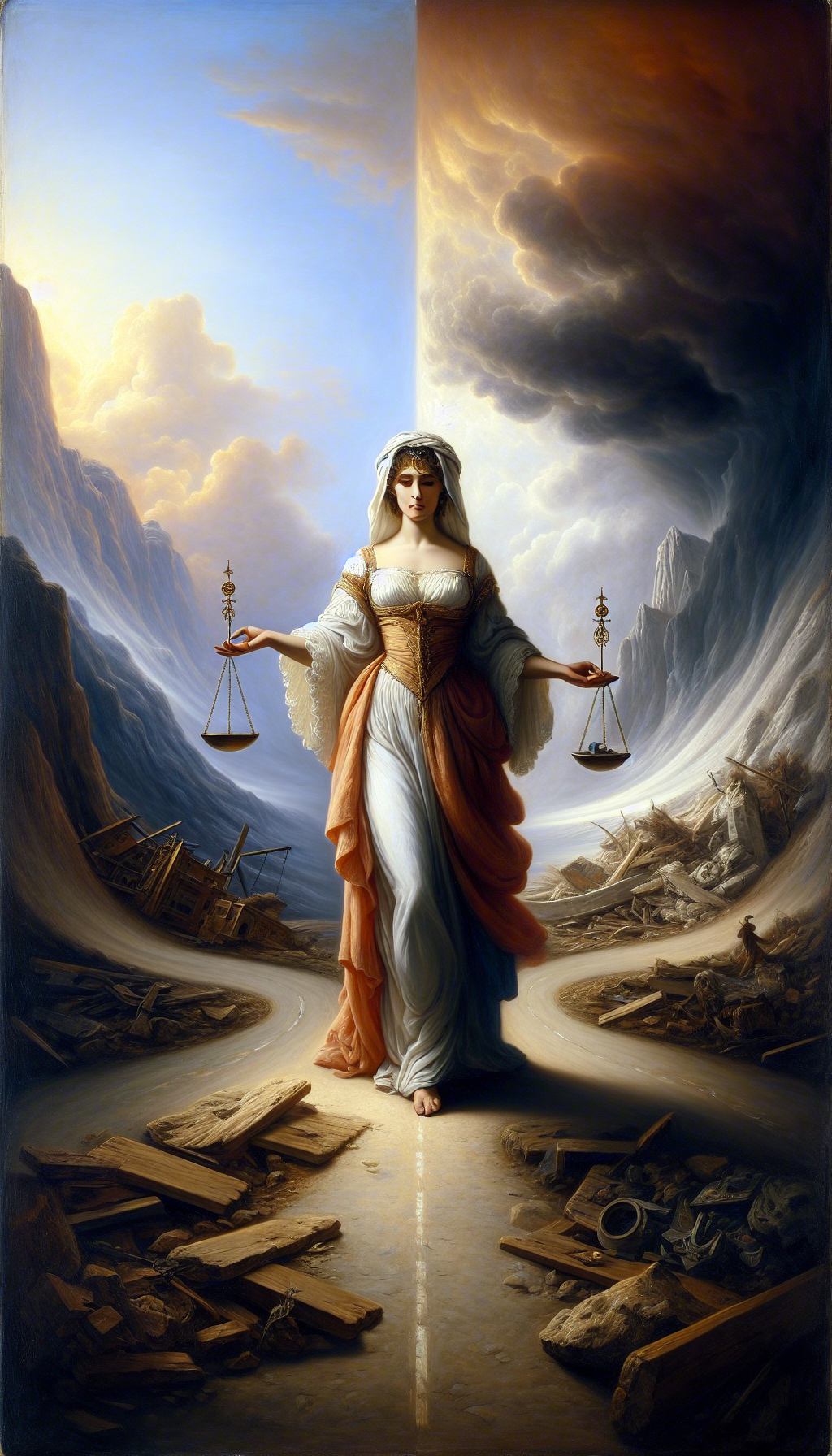
Victoria Sterling’s The Unwavering Path is a Symbolist Realist oil painting in a vertical 9:16 portrait format, depicting a lone figure in Edwardian attire standing calmly at a crossroads during a violent storm. The composition contrasts two diverging paths: one lies in ruins and chaos, shrouded in shadow, while the other ascends a steep, difficult mountain trail toward a radiant light. Sterling employs dramatic chiaroscuro lighting, with deep browns, stormy grays, and a golden glow on the upper path, evoking the atmospheric tension of John William Waterhouse’s narrative symbolism. The figure’s stoic expression and balanced symbolic weights in each hand underscore themes of choice and resilience. Meticulous oil brushwork renders the texture of the weathered coat, swirling clouds, and rocky terrain, creating a mood of solemn determination amid uncertainty.