Imperially Slim: The Light We Waited For
The Poem
About the Poem
Edwin Arlington Robinson’s Richard Cory presents a deceptively simple portrait of a man admired from afar, only to deliver a devastating final image. The poem unfolds from the perspective of townspeople who watch Cory with reverence, describing him as a gentleman rich beyond kings, graceful, and flawlessly polite. His mere presence seems to glitter, and his casual good-morning makes pulses flutter. Meanwhile, the speakers themselves endure a grinding existence of deprivation and waiting. The dramatic tension builds on this stark contrast between Cory’s apparent perfection and the speakers’ longing for his life, creating an atmosphere of quiet envy and social distance. The stakes are revealed in the final line: one calm summer night, Richard Cory goes home and shoots himself. This sudden, shocking death reframes everything that came before, exposing the loneliness behind wealth and the danger of assuming happiness from the outside. Robinson crafts a haunting meditation on appearance versus reality, isolation, and the silent suffering that can hide beneath a glittering surface.
About the Music
Elias Wainwright’s The Pavement’s Gaze is a somber modern classical work that unfolds at a slow, deliberate tempo, evoking the quiet isolation of a rain-slicked street after midnight. The piece is built around a melancholic piano melody, its sparse notes falling like footsteps on wet asphalt, while deep, resonant cello notes provide a grounding, mournful foundation. A distant, unsettling high violin string motif hovers overhead, suggesting an unseen observer or a lingering memory. The composition recalls the minimalist, emotionally charged atmosphere of composers like Max Richter or Ludovico Einaudi, yet Wainwright’s use of space and tension is distinctly his own. The piece concludes abruptly with a single, sharp percussive sound—like a door slamming shut or a heel cracking on stone—that shatters the reverie, leaving the listener with a jolt of unresolved anxiety.
About the Art
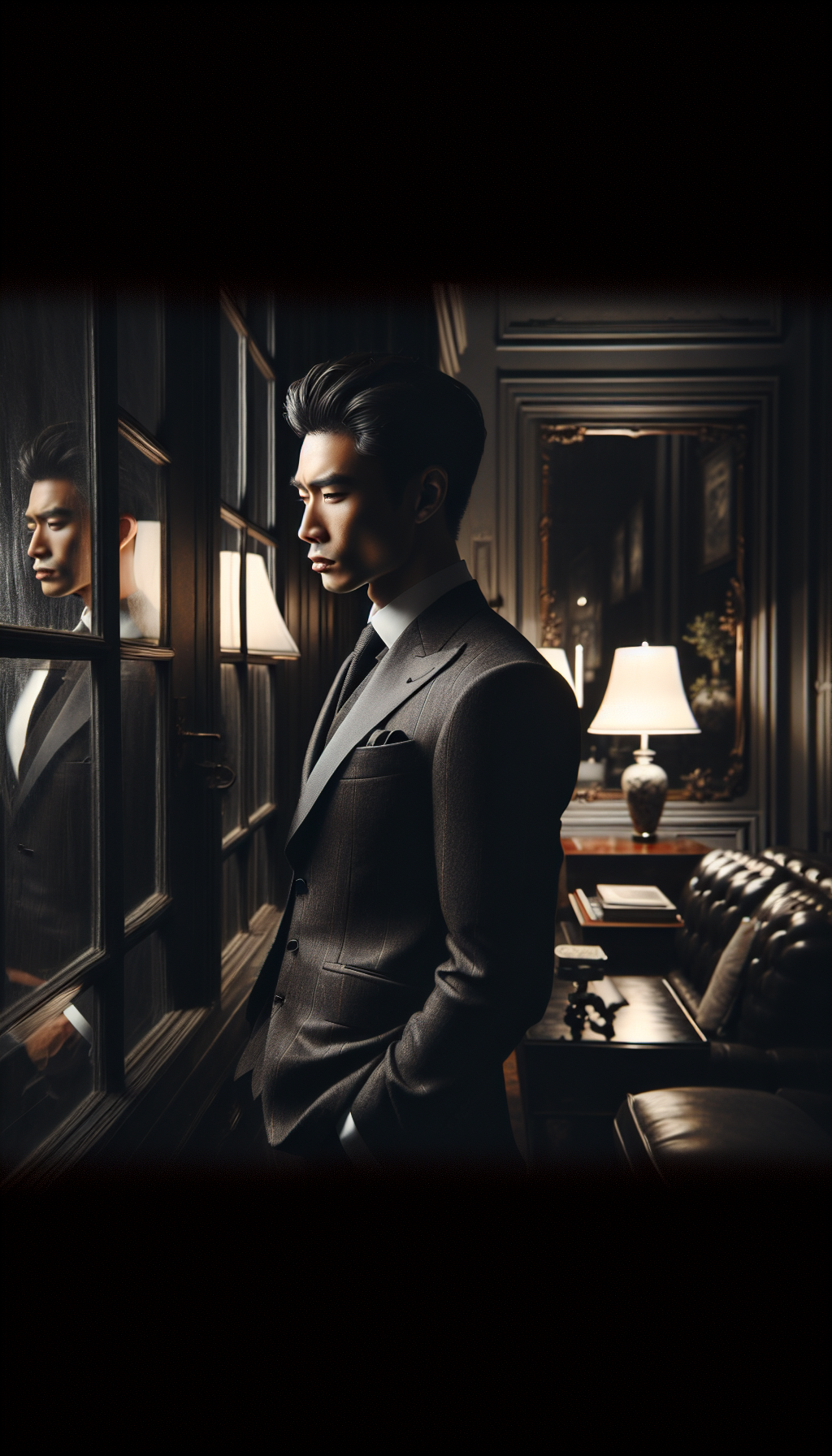
In Corinna Vale's A Calm Summer Night, a handsome, impeccably dressed gentleman stands alone in a grand, dimly lit study, viewed from the side as he gazes out a dark window. The vertical portrait composition fills the frame with the figure and the elegant, shadowy room, while his faint reflection in the glass adds a layer of introspection. Vale employs the oil-on-canvas technique of Narrative Realism, evoking the quiet emotional depth of artists like Edward Hopper. The color palette is dominated by deep, cool blues and blacks, punctuated by the warm glow of unseen lamplight that catches the fine fabric of his suit. The mood is serene yet deeply melancholic, capturing a moment of private reflection against the stillness of the night. This work masterfully balances meticulous detail with atmospheric restraint, inviting viewers into a silent story of longing and solitude.